A label has one job: stay stuck and stay readable for as long as the item needs it. The right material depends on how long that is, what the label will face and what it is stuck to.
Four questions to answer first
- How long must it last? Days, months or years.
- What will it face? Sunlight, water, oil, chemicals, heat, cold or rubbing.
- What surface is it going on? Cardboard, plastic, glass, metal, curved or rough.
- How will it be printed? Your printer may limit the material and ribbon.
Choosing the material
| Material | Suits | Printing |
|---|---|---|
| Direct thermal paper | Short-life labels, such as courier and shipping | No ribbon |
| Chromo or coated paper | General product and retail labels indoors | Wax or wax-resin ribbon |
| Polypropylene (PP) | Moisture and handling, and containers | Wax-resin or resin ribbon |
| Polyester | Durable asset, equipment and rating labels | Resin ribbon |
| Polyimide | High-heat work, such as electronics manufacture | Suitable high-temperature resin ribbon |
Treat these pairings as a starting point, and print a test on your own printer.
The adhesive matters as much as the face
- Permanent: for labels that must stay on.
- Removable: for labels that should peel off cleanly, such as on gift items.
- Freezer-grade or special adhesives: for cold stores, oily or rough surfaces.
Apply labels to a clean, dry surface, and test on your real product. A label that sticks well to cardboard can lift from plastic.
Sizes and rolls
- Measure the space on the item, then the data you need to fit.
- Check your printer’s maximum width, core size and roll diameter.
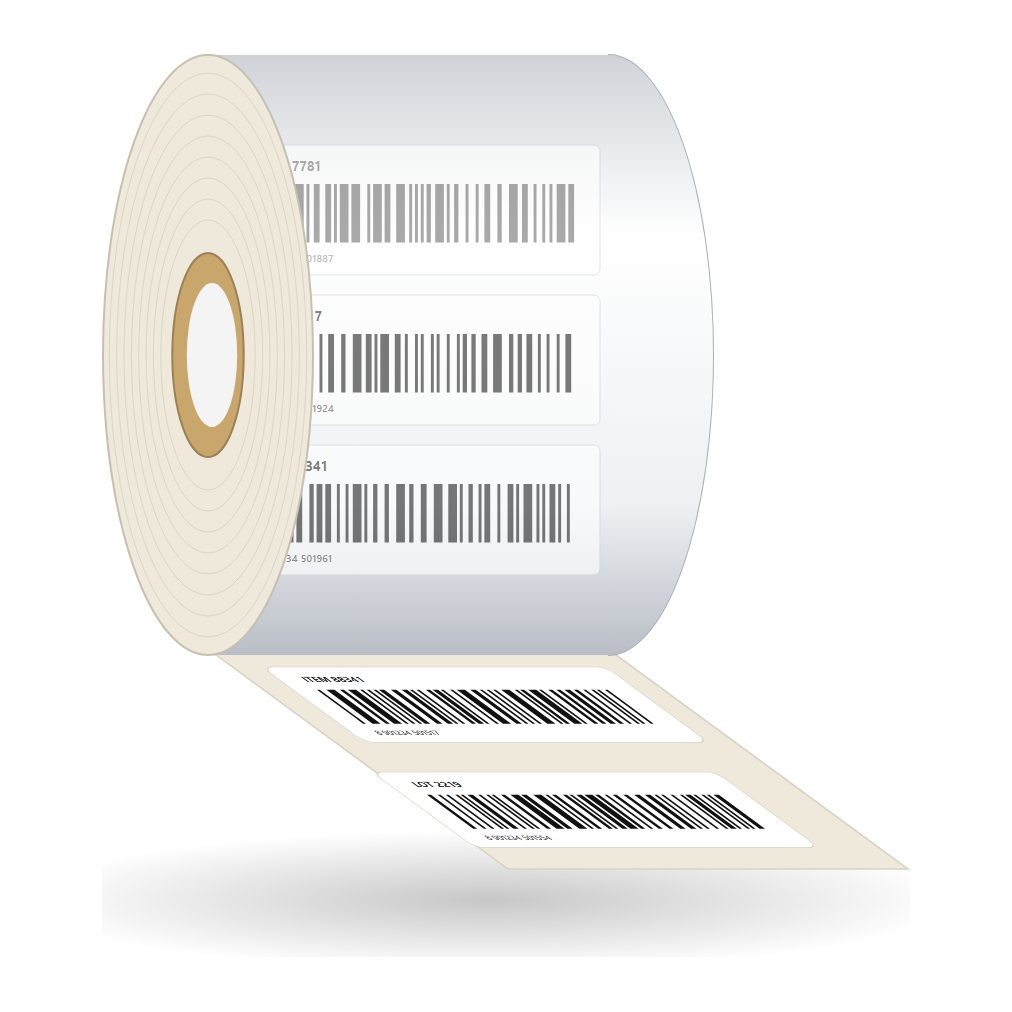
- Decide on the sensing type: gap, black mark or continuous.
- If you need your logo or colours, ask about custom printed labels.
Labels for particular trades
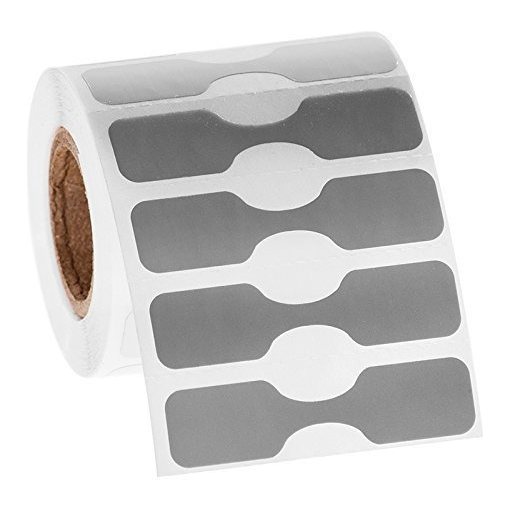
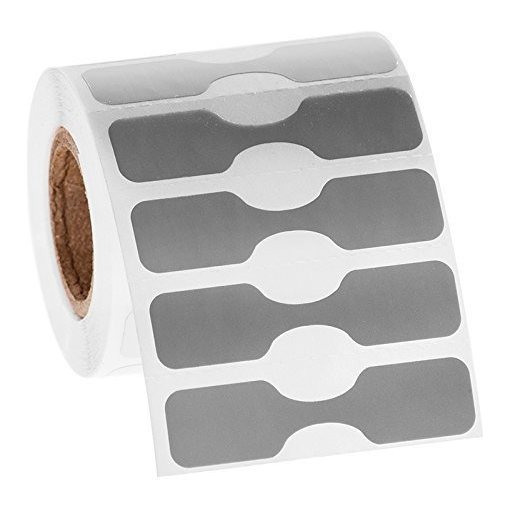
Some uses have their own requirements. See retail, shipping, pharmaceutical, healthcare, jewellery and asset tracking labels.
Common questions
Why is my print smudging?
The ribbon is often too soft for the label or the handling. Moving up a ribbon grade usually helps.
Why did my direct thermal labels turn dark or fade?
The surface reacts to heat and light. Store them in a cool, dark place, or move to thermal transfer for longer life.
Example
Illustrative: a business labelling equipment would usually test polyester with a resin ribbon, while a courier desk would usually choose direct thermal paper. Mindware manufactures labels in New Delhi in standard and custom sizes.
Talk to Mindware
Mindware (Indian Barcode Corporation), based in Dwarka, New Delhi, can help you choose and test the right option. See the Direct Thermal Paper Labels or send an export or domestic enquiry to our sales team.